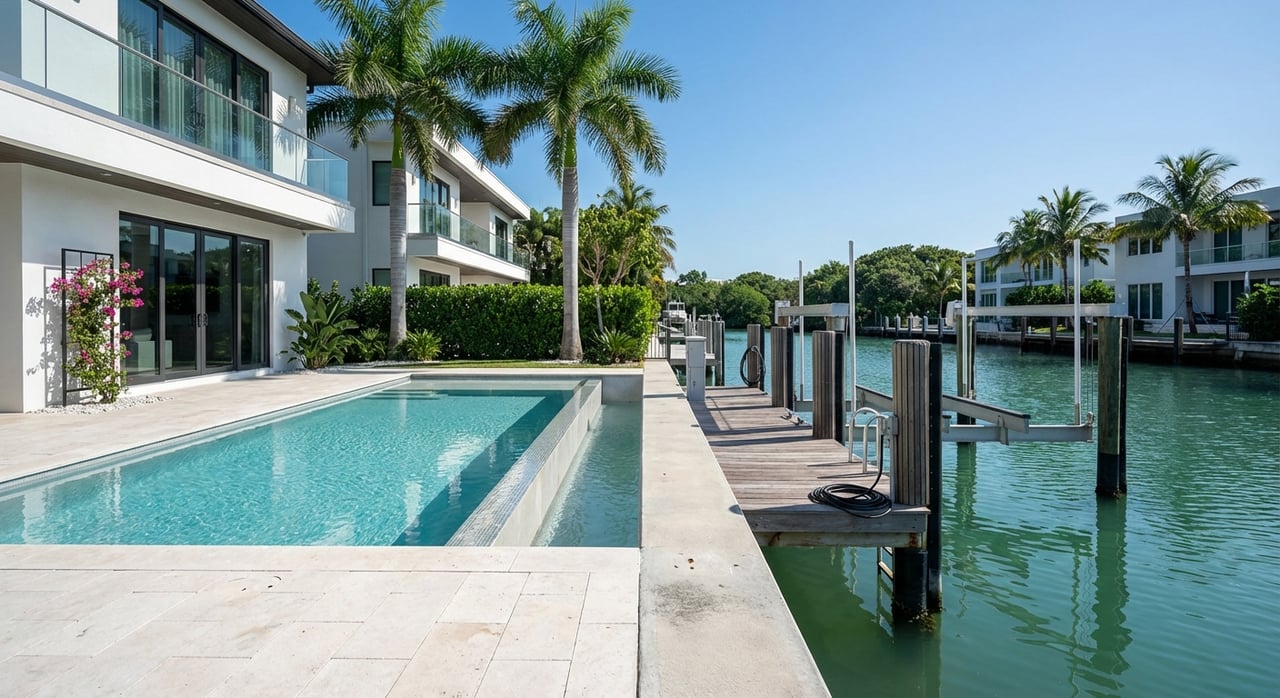
Picture easing your boat off a private dock, gliding through calm canals, and reaching Haulover Inlet in minutes. If that is your goal, Eastern Shores in North Miami Beach belongs on your shortlist. The neighborhood pairs single-family homes and townhomes with canal frontage, docks, and a boating lifestyle. In this guide, you will learn the essentials about seawalls, dock rights, access to open water, permits, and insurance so you can buy with confidence. Let’s dive in.
Why Eastern Shores appeals
Eastern Shores sits in North Miami Beach, just south of Aventura and near Oleta River and Haulover areas. You get a canal-front setting with quick access to Biscayne Bay and nearby marina facilities at Haulover Park. For a location snapshot, see the neighborhood on Mapcarta’s Eastern Shores map and explore Haulover Park’s marina resources.
Many properties were built from the mid-20th century through the 1970s and 1980s, with lots that commonly include seawalls and private docks. If you value backyard water access and shorter runs to the bay, Eastern Shores delivers a boating-first lifestyle rather than oceanfront beach living.
Waterfront factors that matter
Seawalls and bulkheads
Most canal lots rely on a seawall or bulkhead, and owners are typically responsible for maintenance and replacement. Seawall age, visible cracking, cap condition, and tie-backs can become major capital items. Always request any recent seawall inspection and verify permits for past repairs.
If you plan to replace or raise a seawall, understand that modifying the shoreline or extending structures waterward can require city and county permits plus state approvals. Florida rules for sovereignty submerged lands govern docks, piers, and dredging. Review permit history and any letters of consent before you buy, and see the state framework in Florida’s sovereignty submerged lands rule.
Docks, rights, and documentation
Docks can be deeded to the property, part of an HOA, or built under a letter of consent or easement. The exact structure on title affects transferability, maintenance, and your ability to upgrade later. Confirm details through the deed, survey, HOA documents, and the permitting file. For background on state consent for structures over submerged lands, review Florida’s sovereignty submerged lands guidance.
Boat access, channels, and bridges
Many Eastern Shores listings highlight canal routes with access to Biscayne Bay and Haulover Inlet. Verify water depth at low tide, channel width, turning room for your vessel, and whether your path has any fixed bridge constraints. Cross-check route details on official charts and by consulting nearby marinas such as the Bill Bird Marina at Haulover Park.
Seagrass, dredging, and environmental limits
In sensitive areas, dredging or dock extensions may be limited to protect seagrass and habitat. Significant marine work often triggers federal and state review, which can add time, cost, and in some cases denials. If your plans involve dredging or larger structures, budget for environmental permitting and review U.S. Army Corps guidance on regulated activities.
Home hardening and insurance basics
Impact products in the HVHZ
Miami-Dade County is in the High-Velocity Hurricane Zone. Impact windows, exterior doors, and certain roof components should carry Miami-Dade Notices of Acceptance or Florida Product Approvals with HVHZ endorsements. Ask sellers for NOA or FPA documentation and verify that installers followed the approved details, which is important for both code compliance and insurance credits. Learn what insurers and code officials look for in HVHZ-compliant products and documentation.
Flood zones and elevation
If a property is in a FEMA Special Flood Hazard Area, a federally backed loan will require flood insurance. Many Eastern Shores lots are mapped in high-risk coastal zones. Request an Elevation Certificate, check the FEMA FIRM panel and Base Flood Elevation, and obtain quotes from both the NFIP and private carriers. For elevation and mitigation guidance, review FEMA resources on elevating a home in flood zones and coastal best practices in FEMA’s residential coastal construction materials.
Renovation priorities in Eastern Shores
- Seawall replacement or raising, including cap and tie-backs.
- Dock repairs, pile replacement, new lifts, and marine-grade electrical work.
- Impact-rated windows and doors plus roof upgrades using approved products.
- Elevating mechanicals and electrical systems, adding generators, and using flood-resistant finishes at grade.
These upgrades can improve storm performance and can help with insurability. Keep product approvals, inspections, and warranties organized for underwriting and resale.
Showing and due diligence checklist
Use this quick, field-ready checklist to stay focused on the items that matter most for waterfront homes.
Pre-offer and first showing
- Dock and slip rights: Is there a deeded dock or an unrecorded structure? Confirm deed language or HOA documents for transferability and maintenance liability. See state consent context in Florida’s submerged lands rule.
- Seawall condition: Look for cracking, leaning, cap gaps, and signs of settlement. Request any recent seawall report, especially for older concrete.
- Water access and dimensions: Ask for channel width, depth at low tide, turning radius, and nearest obstructions. Validate with charts and consult Haulover Park’s marina about local routes.
- Bridge clearance: Confirm any “no fixed bridge” claims through charts and on-the-water observation to match your vessel’s air draft.
- Roof, windows, mechanicals: Request ages, permits, and warranties for HVAC, roof, and impact glazing. This supports insurance underwriting; see what carriers expect around approved products and documentation.
Post-offer and contingencies
- Title and deed review: Verify riparian rights, recorded dock rights, canal easements, and any assessments tied to neighborhood security or special districts.
- Permit history and inspections: Pull city and county records for seawall, dock, foundation, and major renovations. Confirm final inspections and NOA or FPA paperwork for impact products.
- Elevation and flood: Get the Elevation Certificate, check FEMA zone and Base Flood Elevation, and secure flood quotes from both NFIP and private carriers. Review FEMA’s elevation guidance.
- Seawall location and obligations: Confirm whether the seawall lies within your boundary and whether there are shared-wall agreements that affect future costs. Use the state framework for consent and waterward structures as a reference point for documentation.
- Environmental constraints: Ask if proposed dredging or dock expansion would affect seagrass or protected habitats. Review U.S. Army Corps regulatory notices.
- Structural and marine inspections: For older homes, obtain inspections focused on foundations, corrosion at structural members, and settlement. Have a marine contractor evaluate docks, piles, and lifts. FEMA’s coastal construction resources outline common coastal durability issues.
- Early insurance review: Ask an insurance broker to pre-screen the risk, including wind mitigation credits for impact glazing and roof approvals, and what documentation is required.
How Eastern Shores compares nearby
- Eastern Shores canal-front: Private docks, lot frontage, and quick runs to Biscayne Bay and Haulover Inlet. Expect more single-family and townhome product with backyard water access.
- Sunny Isles oceanfront condos: Primarily high-rise, amenity-rich buildings with beach orientation. Boat mooring typically relies on marinas rather than deeded backyard docks.
- Bay Harbor Islands, Surfside, Bal Harbour: Mix of boutique condos and select single-family waterfront homes with an ocean or bay orientation. Canal docking and private backyard mooring are less common.
The bottom line
Buying a waterfront home in Eastern Shores is as much about the water as the house. The smartest purchases confirm dock rights in writing, vet seawalls and marine structures carefully, and align renovation scope with HVHZ and flood requirements. With the right due diligence, you can create a low-friction path from contract to closing and enjoy the boating lifestyle this neighborhood is known for.
If you are ready to evaluate specific homes or want help pressure-testing renovation and insurance variables, schedule a consultation with the Steven Ross Group. Our team blends local market expertise with developer-grade execution to help you buy with clarity and confidence.
FAQs
What should I verify about a waterfront dock in Eastern Shores?
- Confirm whether the dock is deeded, governed by an HOA, or built under a state consent or easement, and validate transferability via the deed, survey, HOA rules, and permits. Review state consent concepts in Florida’s submerged lands rule.
How do I check “no fixed bridge” access to Haulover Inlet?
- Cross-check listing claims with official nautical charts, measure your vessel’s air draft, and consult a nearby marina such as Bill Bird Marina at Haulover Park for route specifics and tide considerations.
Why is a seawall inspection important for Eastern Shores homes?
- Seawalls and bulkheads are owner-maintained and can be major capital items; assessing age, cap condition, and tie-backs helps you plan costs and avoid surprises.
What building products should I look for in the HVHZ?
- Look for impact-rated windows, exterior doors, and roof components with Miami-Dade NOAs or Florida Product Approvals with HVHZ endorsements, plus proper installation and documentation per industry guidance.
Will I need flood insurance in Eastern Shores?
- If the property lies in a FEMA Special Flood Hazard Area and you use a federally backed loan, flood insurance is required; request an Elevation Certificate and see FEMA’s elevation and mitigation guidance.
Can I dredge or extend my dock to fit a larger boat?
- It depends on environmental constraints like seagrass; some work requires federal and state approvals and may be limited or denied. Review U.S. Army Corps regulatory guidance and consult local permitting offices early.